


Mulled Wine vs Sangria: What’s the Difference?
Updated: Jun 23

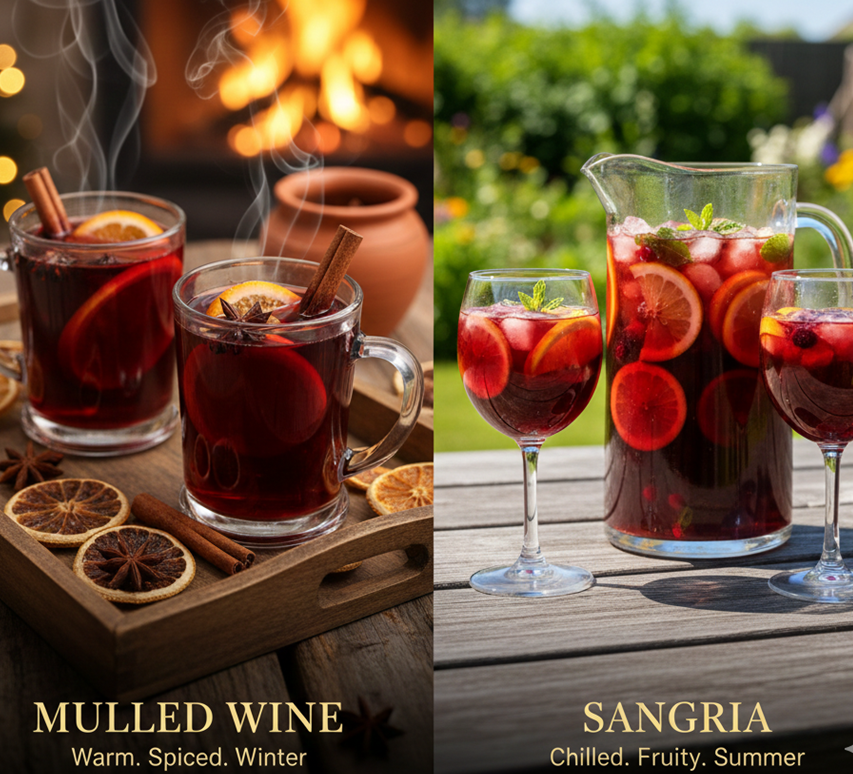
Wondering what’s the difference between mulled wine vs sangria? Both mulled wine and sangria are both wine-based drinks, but they taste completely different. Mulled wine is a hot spiced beverage traditionally served in the winter months, while sangria is a cold drink designed to refresh on hot summer days.
Highlights:
Warm wine drinks have been made for thousands of years, dating back to the ancient Romans.
Mulled wine is usually made by gently heating red wine with spices like cinnamon and cloves, and plenty of sugar.
Sangria is a cold wine-based drink originating from Spain made from red wine, sliced fruits, and brandy.
Warm mulled wine drinks are traditionally enjoyed across Europe, from German Glühwein to Scandinavian Glögg.
Other cold wine drinks include tinto de verano from Spain and white or rosé wine spritzers.
What is Mulled Wine?
Warm wine drinks can be traced back all the way to the ancient Romans, and today they’re enjoyed all over Europe and beyond. They’re traditionally enjoyed in the cold winter months, especially during the lead up to Christmas when mulled wine is served at Advent markets all over the world.
The core concept is gently heating red wine with warming spices like cinnamon, cloves and nutmeg and plenty of sugar. Some recipes add citrus fruits like oranges to help balance the sweetness and add a bright, fresh note.
Easy Mulled Wine Recipe
Here’s a quick and easy mulled wine recipe that you can customize by adding your favorite spices and flavors:
Warm one bottle of fruity, medium-bodied red wine in a saucepan over a low heat.
Add one sliced orange, 2 cinnamon sticks, 4 cloves, 2-3 star anise, and ¼ cup of sugar or honey. Simmer for 10-15 minutes.
Taste to check the sweetness levels and add a splash of brandy or rum (optional).
Strain into mugs or heatproof glasses and serve piping hot.
What is Sangria?
Unlike mulled wine which is served hot with warming spices, Sangria is designed to cool you down in the hot summer months. It originates in Spain where people have been flavoring wine with fruit and spices for centuries. Sangria became really popular in the late 20th century, especially amongst Spain’s growing number of tourists, as a refreshing summer beverage.
Most Sangrias are made with red wine, but you can also experiment with mixing white wines with fruits like nectarines and peaches or sparkling wine with tropical fruits like pineapple and mango.
Simple Sangria Recipe
Sangria is really easy to make since all you need is a bottle of wine, some citrus fruits, and a little brandy.
Pour one bottle of wine into a large pitcher. Choose a Spanish red like Tempranillo or Garnacha for a traditional Sangria experience.
Add sliced fruit like oranges, lemons, apples, peaches or nectarines, and enough sugar or sweetener for your taste. You can also add a small glass of brandy at this stage to add more depth.
Leave the mixture in the fridge for at least 1-2 hours so all the flavors come together.
Serve over ice and add a splash of soda water or sparkling water, if desired.
More hot vs cold wine drinks
Beyond mulled wine and Sangria, there’s many variations on hot and cold wine drinks to explore. Each region or country has its own recipe using different spices and fruits or adding alcohols like rum or brandy for extra depth and strength.
Hot wine drinks:
German Glühwein is made with cinnamon, cloves, citrus and red wine (plus an optional drop of brandy or rum).
Scandinavian Glögg often includes almonds, raisins, and spices like cardamom or ginger.
French Vin Chaud tends to be lighter and sweeter than its European neighbors.
White mulled wine is popular in places like Alsace in France where it’s made using local white wines like Gewürztraminer or Pinot Gris with citrus and sugar.
Cold wine drinks:
Tinto de verano is a Spanish summer classic that probably helped inspire Sangria. It’s made by mixing red wine with lemon soda or sparkling water and serving it over ice.
A white or rosé wine spritzer is another summer classic enjoyed all over Europe and the United States. Simply add a dash of sparkling water or club soda to your favorite summer wine for low-alcohol refreshment.
Bellinis and Mimosas are made by combining equal parts of sparkling wine with fresh peach purée or orange juice. Prosecco, Cava, or Champagne are all great choices, but ideally choose something that’s light and fruity.
Kir is a popular French aperitif made by topping off a glass of dry Bourgogne Aligoté white wine with the blackcurrant liqueur crème de cassis. You can also make a Kir Royale by upgrading the white wine for Champagne or another type of sparkling wine like Prosecco or Cava.

_edited_edited.jpg)
Comments